
Mitigating Sample Evaporation in High-Throughput Workflows
19th Oct 2026
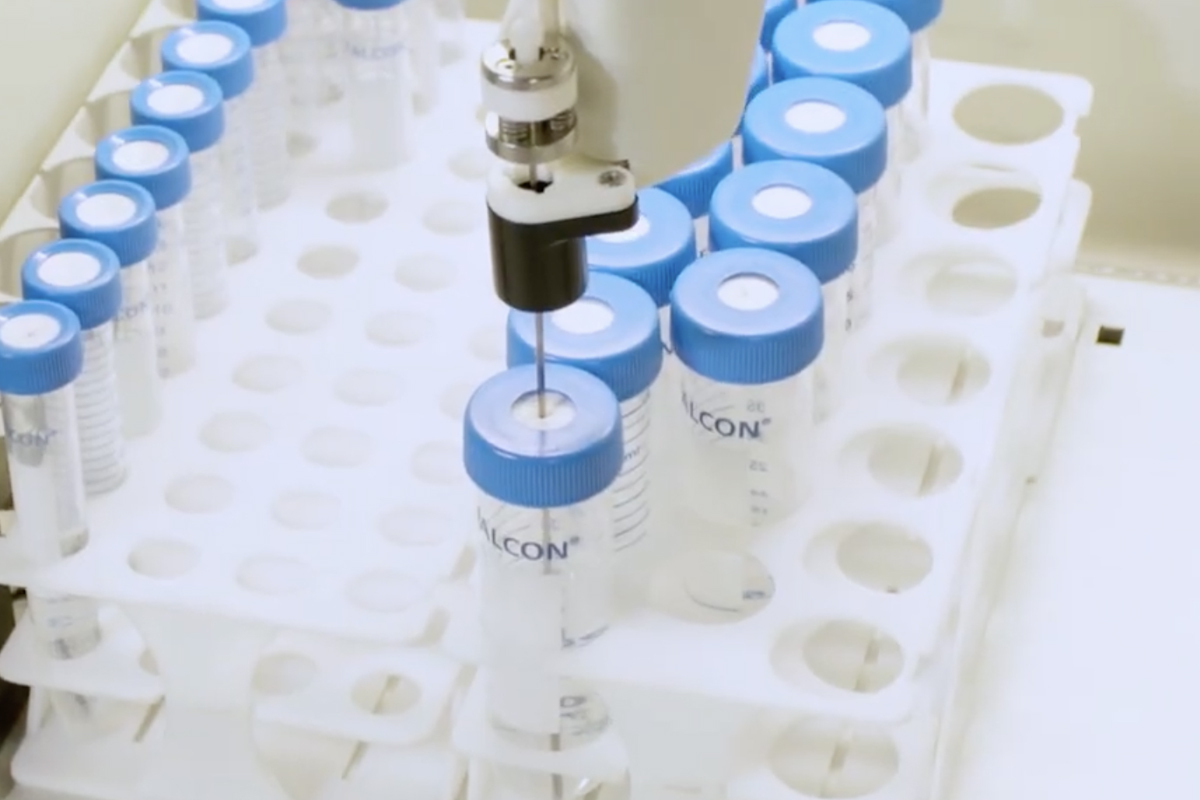
In modern analytical laboratories, automation drives efficiency. High-throughput screening platforms and automated liquid handlers let facilities process hundreds of samples per day to maximize instrument utilization. However, even during routine processing shifts, automated queues may introduce environmental variables into the analytical workflow. One threat to analytical accuracy during these runs is liquid sample evaporation. Managing aqueous solutions and helping to prevent concentration shifts often requires laboratories to implement closed-vial sampling interfaces.
The Mechanics of Sample Loss
Evaporation is a physical process that changes sample concentration and can compromise analytical accuracy. In high-throughput environments where samples queue in autosampler racks, standard open-vial configurations expose the liquid to ambient laboratory air currents and HVAC systems.
When an aqueous sample matrix lacks a physical barrier, ambient airflow can accelerate liquid loss. This continuous loss of volume reduces the total liquid mass within the tube, but the mass of the non-volatile target analytes remains constant.
Operational Impact on Analytical Accuracy
Leaving centrifuge tubes uncapped during automated liquid handling may introduce workflow variables that can compromise data sets.
- Concentration Shifts: As the liquid evaporates, the relative concentration of the target analytes may artificially increase. When the autosampler finally injects the sample, the resulting data may reflect an inflated concentration, potentially leading to calibration failures.
- Environmental Exposure: Beyond physical volume loss, open tubes may invite airborne particulates, dust, and ambient laboratory debris into the sample matrix. In sensitive environmental testing environments, this can create cross-contamination risks.
Transitioning to Closed-Vial Systems
Rather than removing standard screw caps before an automated run, laboratories increasingly use pierceable septa caps. These specialized closures allow automated probes and syringe needles to draw samples directly through the cap. By functionally closing the puncture site when the needle is withdrawn, the septum acts as a physical barrier against ambient air currents. This mechanism helps stabilize liquid volume during short-term autosampler queues compared to completely open-vial formats.
Specifying the Right Closure
Selecting the proper closure may help laboratories mitigate physical exposure without introducing mechanical failures into their automated systems. The SeptaSecure™ product line features pierceable septa caps that help secure liquid samples. Whether a laboratory utilizes uncut or cross-cut septa to match their specific autosampler needle geometry, these non-PTFE closures may help protect sample integrity across routine workflows. By standardizing pierceable septa caps for 15 mL and 50 mL centrifuge tubes, laboratory managers can help reduce the physical risks of evaporation for appropriate sample matrices.
Disclaimer: Syringa Lab Supplies produces SeptaSecure™ septa caps and septa caps with centrifuge tubes utilizing specific brands of caps and centrifuge tubes. All SeptaSecure™ products are produced and packaged in a non-sterile environment. The pierceable septa are constructed from non-PTFE silicone and do not possess the chemical inertness of fluoropolymer-lined closures. Syringa Lab Supplies makes no claims regarding the fitness of these consumables for any specific application. Laboratories must independently validate chemical compatibility, evaporation rates, physical performance, and the use of non-sterile consumables for their specific methodologies, biological assays, automated systems, and analytical requirements. Additionally, the informational blogs and articles provided on this website are for general reference only. Syringa Lab Supplies makes no claims regarding the accuracy, completeness, or applicability of this content, and readers must independently verify all information and workflows for themselves.