
Septa Caps: Cross-Cut vs Uncut
28th May 2026
Understanding Cross-Cut vs. Uncut Septa Caps for Automated Liquid Handling
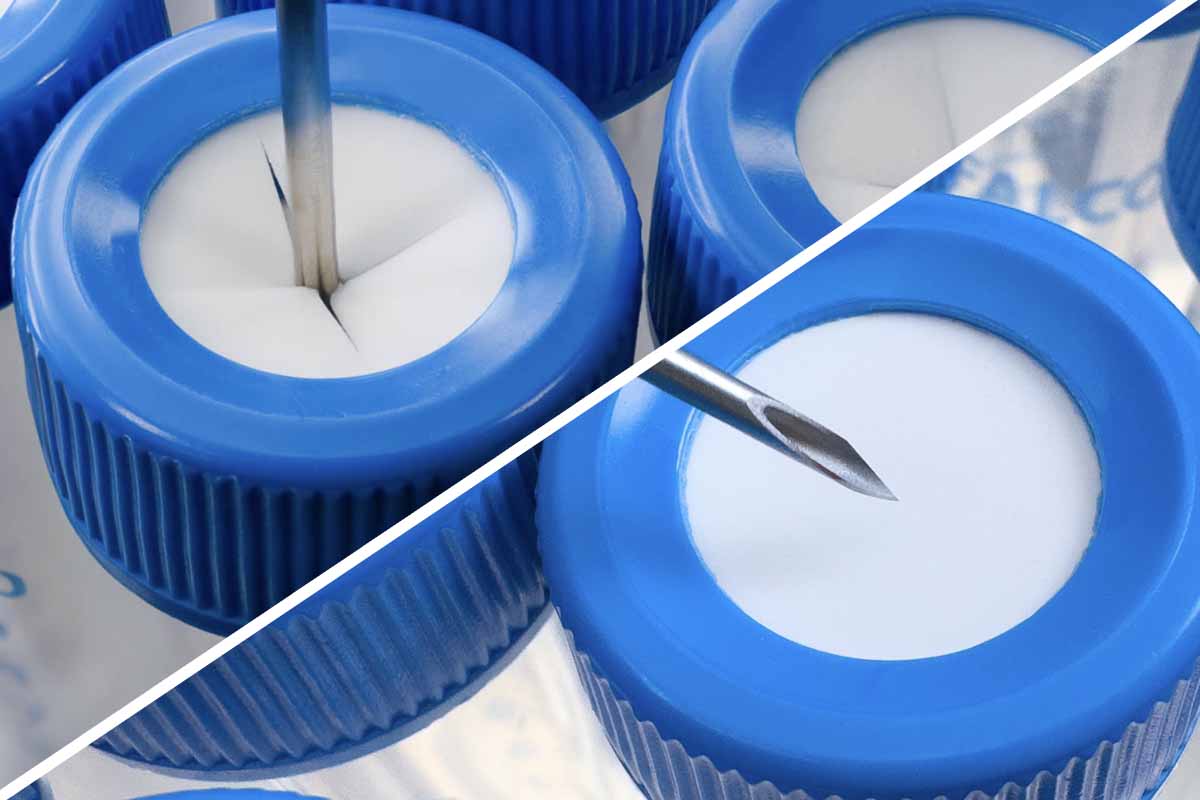
The Mechanics of Septum Penetration
Automated liquid handlers utilize various needle geometries to access samples. The interaction between the autosampler probe and the vial septum is a physical process that requires the needle to displace the septum material. Managing this physical resistance is a standard consideration in high-throughput environments.
The Function of Solid, Uncut Septa
Standard uncut septa caps require the autosampler needle to physically pierce and separate the intact silicone or rubber material.
- Penetration Requirements: Because the material is solid, penetrating an uncut septum requires a sharp, bevel-tipped needle capable of cutting through the elastomer.
- Resistance Factors: Uncut septa caps naturally present higher physical resistance to the autosampler mechanism. Systems using delicate probes or blunt-tip needles may experience operational errors if forced to pierce thick, solid materials.
The Function of Pre-Slit (Cross-Cut) Designs
Cross-cut septa caps are manufactured with a pre-sliced "X" pattern through the center of the silicone disc.
- Reduced Penetration Force: The pre-slit design provides an existing physical pathway for the needle. Instead of cutting the material, the needle pushes the pre-cut flaps aside, requiring significantly less downward force from the autosampler motor.
- Blunt-Tip Compatibility: Cross-cut septa are generally required for liquid handlers equipped with blunt-tip or side-port needles, as these needle geometries are not designed to pierce solid elastomers.
Selecting Based on Needle Geometry
Aligning the septum design with the liquid handler's probe specifications is necessary to maintain equipment function. Syringa Lab Supplies offers both uncut and cross-cut configurations in our SeptaSecure products, allowing laboratories to match their closures to their specific needle requirements.